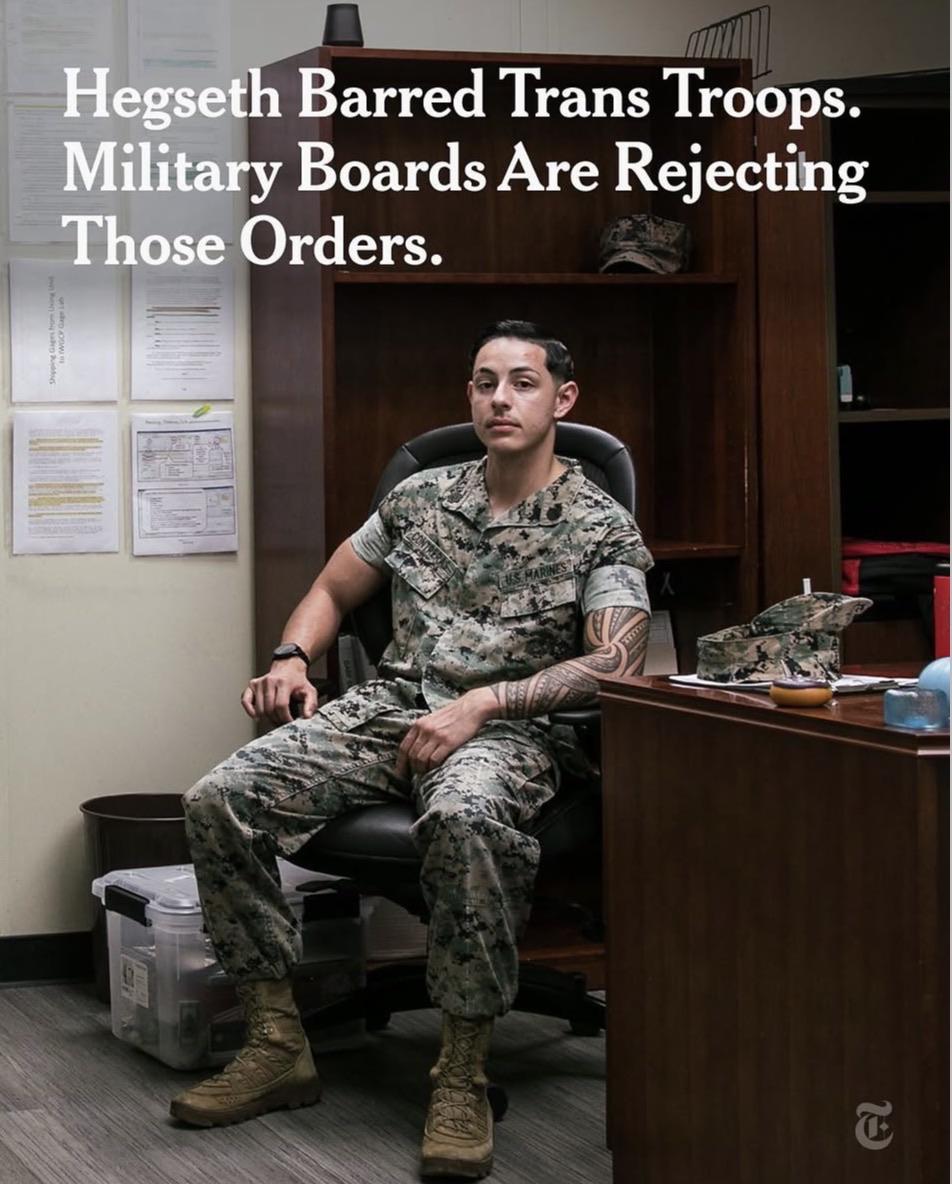
Recent policy discussions surrounding personnel qualifications in the armed forces have reignited intense debates about diversity, operational readiness, and unit cohesion. At the heart of the discussion is the role of marginalized groups—including transgender individuals—within high-stakes environments like the Marines, Navy, Army, and Air Force. While leadership changes often bring shifting directives, the day-to-day reality on the ground frequently reflects a different set of priorities.
For many who have served, the primary concern in active duty has always been competence, reliability, and mutual trust rather than personal identity. Veterans frequently emphasize that shared hardship creates a bond where superficial traits fade away under pressure. As one veteran put it, reflecting on past service during conflicts like the War on Terror:
"He/She is gay? ........well who the fuck cares? They're a damn good Soldier."
Others echo this sentiment, emphasizing that operational effectiveness relies on trust between peers. Another service member noted:
"I literally could care less who a person is individually, as long as they got my 6 and i thiers there is zero problem"
Critics of restrictive policies argue that reducing personnel numbers or sidelining qualified individuals in specialized fields—such as intelligence, cybersecurity, or technical operations—risks creating broader institutional vulnerabilities. Within military culture, informal networks often prioritize functional capability above external political narratives.
At the same time, discussions often touch on the practical logistics of military service, including medical continuity and deployment readiness. While debates continue at leadership levels, the frontline perspective often remains rooted in a straightforward operational ethos: capability and mutual reliance dictate who belongs in the foxhole.