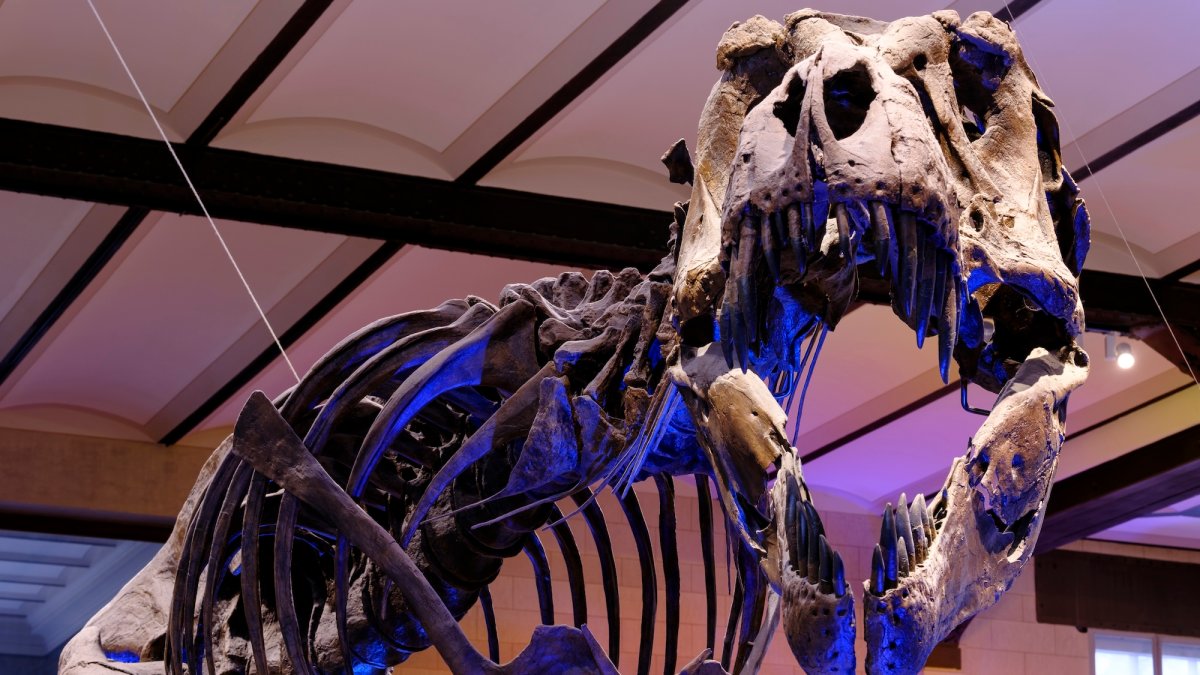
Paleontologists have made a groundbreaking discovery that challenges our understanding of fossil preservation. For the first time, intact biomolecules and mineralized red blood cells have been identified in the fossilized limb bones of a 115-million-year-old dinosaur, Aratasaurus museunacionali. This finding, published in Proceedings of the National Academy of Sciences (PNAS), marks a significant leap in molecular-level paleontology.
A Landmark Discovery
The fossil, discovered in 2008 in northeastern Brazil, belongs to a juvenile theropod dinosaur. Researchers found evidence of heme, an oxygen-carrying blood compound, preserved alongside a complex manganese oxide called hausmannite. This mineral played a crucial role in maintaining the cellular structures of heme and other biomolecules, such as collagen amino acids. Kliti Grice, a chemist and study co-author, described the discovery as 'a landmark' that challenges the assumption that certain biomolecules cannot survive over millions of years.
How Did It Happen?
The preservation of such delicate structures is attributed to rapid burial in an environment rich in microbes but low in oxygen. This unique combination allowed the biomolecules to remain intact, offering a rare glimpse into the ancient past. While the discovery does not involve DNA—which is known to degrade over time—it opens new avenues for studying dinosaur metabolism, blood evolution, and even ancient activity levels.
Implications Beyond Earth
The study’s implications extend far beyond paleontology. If such fragile biomolecules can survive in harsh environments for millions of years, it raises the possibility that similar traces of life might exist elsewhere in the universe. This discovery not only deepens our understanding of Earth’s ancient life but also fuels speculation about the potential for extraterrestrial biology.
Public Reaction: Humor and Caution
The announcement sparked a mix of excitement and caution. Some joked about the potential for a Jurassic Park-like scenario, with one commenter quipping, 'Nothing unites a country like a T-Rex loose in San Diego.' Others expressed concern, with one person urging, 'DON'T. FUCKING. DO. IT!' Despite the humor, many acknowledged the scientific significance, noting that while DNA cloning remains impossible, the discovery is 'an incredible piece of paleontology.'
Looking Ahead
While the idea of resurrecting dinosaurs remains firmly in the realm of science fiction, this discovery underscores the remarkable capabilities of nature to preserve life’s traces over unimaginable timescales. As research continues, scientists hope to uncover more about the ancient world and the processes that allow such preservation. For now, the fossilized blood of Aratasaurus museunacionali stands as a testament to the enduring mysteries of life on Earth—and perhaps beyond.

